Iran Tours

Explore Iran: Where Ancient Persia Meets the Modern World

All Iran Tours

Country Overview

Tehran: The Heart of Iran


Capital of Iran for 200 years, a visit to Tehran is a must for those who want to understand this fascinating country.
Tehran is a city of history, revolution, religion and the heart, not only of the country but of the Iranian people. Tehran is a city of contrasts with ancient history hidden behind modern buildings; a bustling, busy, traffic-filled, chaotic settlement surrounded by distant, often snow-capped, majestic mountains.
A city framed in the media as a dangerous religious fanatics playground, a walk around its centre will reveal something completely different.

Highlights
The Den of Espionage (Former US Embassy)
The Den of Espionage (AKA Embassy of the United States, Tehran)
The Den of Espionage may not be everyone’s cup of tea, although if you are a certain age or a fan of the movie Argo it will be right up your street.
The events that occurred on the 4th November 1979 would make the US Embassy in Tehran famous; when militant students in support of the revolutionary leader, Ayatollah Khomeini, stormed and seized the building.
The capture of the embassy would lead to 52 American staff being held hostage for 444 days and the cessation of all diplomatic relations between Tehran and Washington to this day.


Azadi Tower (Freedom Tower)
The 50-metre high Azadi Tower is, without doubt, Tehran’s most famed and iconic building. Designed by Iranian student Hossein Amanat in 1966, the tower would be completed in 1971 to mark the 2,500-year celebration of the Persian Empire.
Originally named the Shahyad Tower, the Azadi Tower boasts a basement museum that contains various ancient artefacts such as ancient cuneiform tablets, ceramics, and pottery.


Golestan Palace & Gardens
Dating back to the Qajar dynasty, the Golestan Palace is also known as the rose garden. This ornate, beautifully designed palace was the home of Iran’s kings.
During the Pahlavi era, it wasn’t so much a residence but used for official ceremonies where a little more pomp and splendour were needed. Golestan Palace consists of 17 buildings, including palaces, museums, and halls; its ornately arched ceilings and mirrored floors are a photographer’s delight.
One of the most notable features is the marbled throne which has seen the coronation of many Iranian kings, the last being Reza Shah of the Pahlavi dynasty in 1925.

Isfahan: The World Heritage City


Isfahan, sometimes rendered ‘Esfahan’ has existed as a settlement for thousands of years, however during the Zoroastrian era in Iran, the city began to grow into major regional centre – benefitted by its fertile soil, due to its proximity to the Zayandehrud river.
The city continued to grow, unabated by the turbulent political situation which saw the Seljuq Turks take over the city, allowing it to grow in size and splendour. However, the true golden age of this city occurred during the Safavid dynasty when the city was named the capital of Persia and became famous, not just throughout Iran, but as far as Europe due to its extensive cultural significance and political importance.
Although Isfahan is no longer the political heart of Iran, the culture remains as the city is a major hub for textiles, carpets, traditional food and local handicrafts.

Highlights


Shah Mosque
Shah Mosque is an amazing example of traditional Islamic architecture and is famous for having the tallest double-shell dome, reaching a height of 52 metres! Stone tablets inscribed with the words of monarchs past decorate the walls inside the mosque, adding to the sense of divine history which encompasses the complex.
There are also some fantastic examples of Islamic tilework on display, something which you may even get the chance to watch being produced!


Naqsh-e Jahan Square
The World Heritage Site was enshrined by UNESCO in 1979, although the square itself has been standing for over 400 years! This stunning public space isn’t just a rectangular slab of concrete either, immaculately-cut grass and perfectly trimmed hedges adorn the centre of this ancient artefact in the heart of Isfahan.


Jameh Mosque
Another mosque has reached the top 3 list of Isfahan, but for good reason! The Jameh mosque is another World Heritage site and is a stunning example of traditional Islamic architecture in Iran. With the first mosque on the site being built around 771 CE, the modern day iteration of the Jameh mosque is a combination of many different styles from many different periods, all crashing together to create one of the most incredible buildings you’ll find not just in Isfahan, but in all of Iran!

Mashhad: Iran’s Spiritual Capital


The city of Mashhad is the second-largest city in Iran and sits in the north-east of the country near the border with neighbouring Turkmenistan (making it the perfect stopping point for visitors travelling in from Ashgabat). The name Mashhad means ‘Place of Martyrdom’ and takes its name from its most famous and important site, the shrine of Imam Reza – a key pilgrimage site within Iran.
Not only a religious centre, many Iranians know Mashhad as the city of Ferdowsi, a famous Persian poet who enjoys great popularity in modern Iran. The city has been home to many famous writers, poets and other guardians of Persian culture despite being governed by many different cultures and governments during its long history. Today, Mashhad is considered the spiritual capital of Iran, and it’s not difficult to see why.

Highlights


Shrine to Imam Reza
The Holy Shrine of Imam Reza is a lot more than it sounds, considered by many to be the heart of Shia Islam; this large complex is visited by millions every year. The Shrine complex was started in 818 AD and marks the burial site of Ali ibn Musa al-Ridha, a descendant of the Prophet Muhammad (PBUH). This beautiful building covers almost 600,000 m2 incorporating fourteen minarets, seven courtyards, two fountains, four bast halls, and the imposing Goharshad Mosque.


Mashhad Bazaar
Mashhad Bazaar is a real treat, referred to by many Iranians as the world’s heart for saffron it is also seen as a centre for that most Persian of gems, Turquoise. Mashhad Bazaar has an authentic middle eastern feel to it with over 1,100 stalls and 3km of passageways. Visit for a chance to browse everything from saffron worth more than gold, carpets, turquoise, jewellery, prayer beads and more while the smell of middle eastern perfume permeates your thoughts.


Tomb of Nader Shah
Nader Shah was King of Iran during the 17th century; a Turkmen ruler known as the Napoleon of Persia, Sword of Persia, and after his assassination in 1747, the last great Asian Military Conqueror. Although relatively modern, the Mausoleum doubles as a museum and houses some precious artefacts from the time.

Visiting Iran

Everyone has heard of Iran but mainly for the wrong reasons; however, Iran ticks so many boxes as a travel destination offering excitement, history, culture and adventure.
Yes, the visas for many nationalities can be a bit of a hurdle, but that’s what we’re here for; with a bit of time and careful planning, we will hopefully deliver the tour of a lifetime.
Come with us and see what we have to offer, from Iran’s modern mountain-ringed capital, home to mosques, churches, endless bazaars, and museums covering everything from the revolutionary to the ancient. As if that weren’t enough further afield, we have Persepolis, once capital to the legendary Xerxes. Further still, one finds Mashhad, a city of ornate mosques and the burial place of Imam Reza, making it a religious centre for all Shia Muslims.
Aside from the grand Persian Islamic architecture, the ancient history and fascinating Iranian place with in the world its people surprising are some of the most friendly and colourful in the region welcoming you not only to their country, city, town, village or house but offering some of the most delightful cuisine.
All of our visitors to Iran will have a briefing upon arrival by one of our expert staff; we’ll be there to help you learn a little more about this unique and fascinating country before your adventure begins.

Iran in Spring & Summer

Spring (March-May)
As the central region begins to warm in the spring sun, the country comes alive celebrations of the famed Persian new year start and pilgrimages to Mashhad are granted clear yet warm days.
For many, springtime offers the best time for travel into Iran, although expect it to be busy.
Summer (June-August)
As the gentle spring sun gives way to the hot summer sun, visitor numbers drop as the temperature rises. Some cities, especially in the south, become unbearable for visitors, especially those from colder climes.
That said, a carefully planned visit to some of the northern regions or mountain trekking will not disappoint.

Iran in Autumn & Winter

Autumn (September – October)
Autumn isn’t shared across all regions, but these golden months see the temperature dropping across some of the must-see cities and towns in Iran.
These autumnal months can be great for local farm visits and cultural tours when the lower sun offers a beautiful light to photograph the delightful architecture.

Winter (December – February)
Those who assumed Iran didn’t see a true winter, check again as much of the country will see the temperature drop below freezing.
Only in the far south will there be a pleasant warmth whilst the mercury in the rest of the country drops along with the visitor numbers.
Don’t give up hope, though, as if you enjoy a spot of skiing, Iran has some great resorts and runs to keep you happy.

Flights To & From Iran

Whilst Iran may not be served by as many airlines as the UK’s Heathrow or New York’s JFK, Tehran’s Imam Khomeini International Airport is a destination for many of Asia’s leading airlines.
On most tours, you will be responsible for getting yourself into Iran; while you may choose to arrive on the national flag carrier Iran Air, or Russia’s Aeroflot, we recommend flying Turkish Airlines via Istanbul. Turkish Airlines operates numerous flights in and out of Tehran as well as other major cities in the country such as Isfahan, Mashhad and Shiraz.
Other prominent airlines operating flights to Iran include Emirates, Qatar Airways, and Lufthansa.
If you have any enquiries regarding flights between your home country and Iran, feel free to get in touch with us at info@absolute-nomads.com or contact your tour manager if you’ve already booked on one of our Iran tours.

Road Crossings to Iran

Iran shares borders with Turkey, Armenia, Azerbaijan, Turkmenistan, Afghanistan, Pakistan and Iraq. Each of these countries shares at least one border crossing point by road with Iran although given the complexity of the region, the availability of customs services is subject to change.
There are 3 main border crossing points between Turkey and Iran, the most well-trodden route being Gurbulak-Bazargan. This crossing is operational 24/7.
The crossings between Azerbaijan and Iran at Astara and Bilasuvar are open to foreigners and relatively well-used with bus services operating between Tehran and Baku.
Travellers entering Iran through Iraq have a choice between 6 border crossings, although it is unclear which are open to foreigners. We would recommend not attempting to enter Iran by road from Iraq. Similarly, Afghanistan operates limited border crossings for foreigners, although travelling to Iran through Afghanistan is not recommended.
All border crossings that are part of a tour will be selected and organised by Absolute Nomads.

Iran Group Tours

Iran is another of those countries where many travellers opt to visit as part of a tour group. And to be fair, why not? As part of an organised tour, the visas are a little easier to obtain, the cost will be less, and you have the opportunity to travel with like-minded explorers learning a little more about your fellow adventurers as well as Iran.
All our group tours will be led by an Absolute Nomads tour leader whilst also using local guides and drivers; they may change to reflect the local knowledge in a specific area.
Our tours through Iran are scheduled to allow for the changing seasons, climate, religious holidays and festivals to deliver that holiday of a lifetime.
Many of our passengers are like-minded travellers with a sense of adventure and a keen interest in the countries we visit and may not be too familiar with group tour travel.
This is why we like to keep our itineraries exciting and interactive, don’t just take our word for it – take a look.

Iran Independent Tours

There may be a little trepidation about travelling as a solo traveller or on a private tour for many adventurers to Iran. That’s where we at Absolute Nomads step in whilst we do pride ourselves on our exciting group tour itineraries; we also understand that people want to be alone at times, whether it is travelling with a group of friends, family or merely solo we’re here to help.
As with most of our tours, we can adapt or offer one of our existing itineraries; alternatively, plan a tour entirely from scratch to suit your specific interests or requirements. You may feel that your ideas are too complicated or impossible to achieve but give us a try, and with our expert team on the ground in Iran, we will try our best to help your dreams become a reality.
It goes without saying that for our independent tours, we still provide local guides, tour leaders, and expert guidance through planning your adventure.
If you’re interested in booking an independent tour to Iran, get in touch with us today, and we’ll start working on a customised itinerary catering to you personally.

Latest Iran Blog Posts

How To Get An Iranian Visa

No Travel List Israeli passport holders can not visit Iran. Also, anyone with evidence that they have visited Israel in their passport can not enter Iran. If you have Israeli stamps, apply for a new passport. Visa-Free Countries Congratulations if you have a passport from one of the following countries, you will not require a […]

Tehran | The Heart of Iran

Capital of Iran for 200 years, a visit to Tehran is a must for those who want to understand this fascinating country. Tehran is a city of history, revolution, religion and the heart, not only of the country but of the Iranian people. Tehran is a city of contrasts with ancient history hidden behind modern […]

Iranian Rial | Iran’s Currency

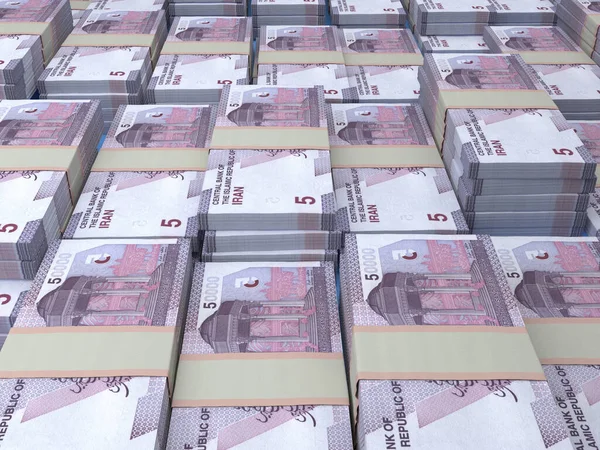
The Iranian Rial is the official currency of Iran and has been the standard monetary unit in Iran since 1798. At the time of writing, the government of Iran is in the process of changing currencies from the Rial to the Toman, with one Toman being worth 10,000 Rials. So, whilst this blog may soon […]