Soviet Mongolia

Join us as we venture through Mongolia’s Soviet past; discovering jet fighters, murals and operational battle tanks!

Month: May

Soviet Mongolia

The Soviet Union lasted from 1917 to 1991 and it influenced almost every part of the globe in some way or another.

Russia became the world’s first communist country after the  October Revolution in 1917 and quickly, many of the countries which were part of the Russian Empire were swallowed up and renamed to align with the expanding Soviet Union. Some surrounding countries were also pulled into the fold as the Union sought to expand, including Mongolia.

On this tour, you’ll be accompanied by a western tour leader resident in Mongolia as well as a local guide and local experts at some of the sites we visit. We’ll travel to some of the country’s best kept secrets from its communist past, from Soviet fighter jets to hidden statues of Lenin and from communist border towns to fully-operational military bases.

So strap in and prepare to dive back through time to Soviet Mongolia.

Download PDF

Soviet Mongolia Tour

What is included in this tour?Items that are included in the cost of tour price.
  • All Listed Meals
  • All Listed Accommodation
  • Internal Flights
  • Local Guide / Tour Leader
  • Visa Assistance
  • Transport & Driver
  • Water
What is not included in this tour?Items that are not included in the cost of tour price.
  • Flights to/from Mongolia
  • Travel Insurance
  • Snacks/Drinks/Extra Expenses
  • Tips for Guides / Tour Leader
  1. Day 1 Arrival Day & Ulaanbaatar’s Soviet Heart

    We’ll meet in the designated meeting spot in Ulaanbaatar before heading to our hotel to begin our adventure. For information regarding airport transfers, contact your Tour Manager.

    Once you have checked in, we’re raring to go; first up, only a stone’s throw from our hotel, is Sükhbaatar Square. Named after Mongolia’s revolutionary hero Damdin Sükhbaatar shortly after his death in 1923, the square’s name was briefly changed to Genghis Square, much to the ire of many local people, so in 2016 it was reverted to its original moniker.

    At the centre of the square stands an equestrian statue of Damdin Sükhbaatar, while a large monument dedicated to Genghis Khan sits atop the steps of the government palace.

    To the northeast of Sükhbaatar Square is the National University of Mongolia, established in 1942. We’ll visit to view its Soviet architecture and catch a glimpse of the statue of Khorloogiin Choibalsan. Choibalsan was known by some as the Stalin of Mongolia as he oversaw the purges of the 1930s which resulted in the deaths of over 35,000 people.

    We continue on foot through the city, glimpsing some of the old Soviet apartment blocks on the way to our next stop, the State Department Store. Established in 1921, this relic from the Soviet period has seen many changes; however, it’s worth visiting as it still has a few older corners oozing communist heritage.

    Across from the State Department Store, we call at the Beetles statue: the beetles never visited Mongolia, but there is indeed a beautiful statue erected for them. The story goes that local people had it built from their funds after the soviet period in memory of the music they listened to.

    Before dinner, we stroll back to our hotel past the National Academic Drama Theater, Mongolian Stock Exchange and The National Theater, all excellent examples of Soviet design and construction. After a briefing, we will head out into the city once more for dinner.


    Accommodation: Hotel Ulaanbaatar

    Included Meals: Dinner

  2. Day 2 Ulaanbaatar Soviet City Tour

    This morning, after breakfast, it’s straight out as we begin our exploration of Ulaanbaatar. We’ll take a bus since we’re travelling a bit further afield than yesterday.

    The Mongolian Military Museum is an ageing museum that’s home to a plethora of Soviet-era military hardware from MiG fighter jets, rocket launchers, anti-aircraft guns and tanks, and that’s only on the outside. The museum interior covers history from the Mongol Empire right the way through to its more recent Soviet past. After our visit, it’s on to the former home of, and now museum to, Marshall Georgy Konstantinovich Zhukov.

    The Marshall Zhukov House Museum is a small but exciting affair, especially for those interested in the period; it opened in 1979 and it’s in this very house that Zhukov stayed from 1939-1940 as he directed Soviet troops in the battle of Tavan Gol. We’ll get to view his living quarters as well as pictures, maps and weapons from around the time of the Soviet defeat of the Japanese army at this little known battle. Across the road from the Zhukov house, we’ll pay a visit to the Marshall Zhukov Statue. Located in a small square, a rather splendid bust of the hero of the Soviet Union.

    Hoping that you’re not too tired of statues, we have a real treat for you as we continue by bus and call at the father of all Soviet statues, Lenin. Once located in front of our very own Ulaanbaatar Hotel, this Lenin statue was commissioned in 1951 and stood for many years until it was taken down in 2012 by the then-mayor of Ulaanbaatar.

    Following a hearty lunch in a restaurant from the Soviet period, we’ll head into the city, stopping at local apartments to view mosaics, still in place decorating the ends of traditional 1950’s apartment blocks.

    Our final destination of the day prepares us perfectly for our overnight train as we stop at the Ulaanbaatar Open Air Railway Museum. This pre-dinner visit houses six locomotives used throughout the last 65 years. Many of the engines still have their Soviet detailing and imagery, including a large image of Joseph Stalin.

    As evening approaches, we board our local train to Dornogovi Province’s Sainshand town. We’ll have four-berth cabins as we trundle through the night across Mongolia’s vast wilderness.


    Accommodation: Overnight Train

    Included Meals: Breakfast, Lunch, Dinner

  3. Day 3 Exploring Soviet Border Towns

    We’ll arrive in the early morning at Sainshand Town. After alighting the train, for those awake enough, we will pause to view the small, but well-appointed Soviet outpost train station before heading into town for a basic breakfast.

    Sainshand Town is the capital of Dornogovi Province and lies due south-east of Ulaanbaatar, sitting to the east of the Gobi desert surrounded by scrub and flat arid terrain. This remote town is a real mix of old and new, only 130 miles from the Chinese border this position made Sainshand an essential military base during the Sino Soviet split.

    Sainshand was once home to the air-missile intelligence stations of the Soviet Union; these would protect the underbelly of Russia from possible attack from a hostile China. The town was separated into three distinct areas, north, south, and east; unfortunately, in modern times, the northern section has been destroyed and used to construct newer buildings; the east was sealed off for use by the Mongolian air force.

    Following breakfast, we will see what remains of the town’s once Soviet past as we look to the southern area of this frontier settlement. Luckily for us, a little still remains, mainly used for habitation and business for local people.

    After lunch, we drive 2 hours north to the village of Shivee-Ovoo. This small habitation was once home to the Soviet motorized rifle division; believe it or not, there were up to fifteen-thousand soldiers once here. These days all that remains in this desolate windswept area are the former homes built for the servicemen and their families and the officer’s mess. A little exploring will also reveal a few mosaics.

    Once we have finished our Soviet exploration for the day, we have our final drive to the provincial capital, Choir. Once here, we locate a local restaurant for our evening meal and then head to our hotel for tonight situated in one of the former Soviet districts block apartments.


    Accommodation: Art Hotel

    Included Meals: Breakfast, Lunch, Dinner

  4. Day 4 From Yuri Gagarin to Soviet Bases

    After breakfast, we’re ready to continue our exploration of Choir, heading to the Soviet-style Choir Railway Station, outside of which is a Statue of Yuri Gagagrin built to commemorate the flight into space of Mongolia’s first cosmonaut Jügderdemidiin Gürragchaa in 1981.

    During the Soviet period, Choir housed the most extensive military base for the Soviet Union, but that has long gone with many of the buildings dismantled. We will have a little explore and make sure to visit the 25-meter high statue erected in honour of the USSR’s war heroes.

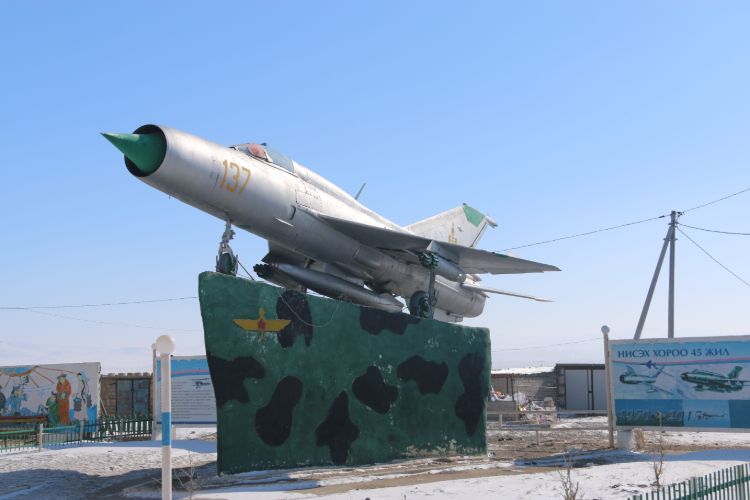
    Upon leaving Choir, we’ll continue north, and, after a while, we’ll make a stop at one of the region’s former airbases. Here it gets a little interesting as we have the opportunity for a bit of ‘urbex’ (urban exploration) and see one of the abandoned MiG monuments (a former MIG fighter jet raised pointing skyward). We will also be permitted to enter the former base to see around some of the remaining airfield buildings if we’re lucky.

    From here, we’ll drive onwards to check on another former Soviet airbase located in the town of Bagakhangai; we’ll see if we can obtain permission to enter the area and its aircraft hangers. Around the town, there are also some abandoned buildings worthy of a few minutes of our time.

    Once we have finished it’s onwards; our drive takes us across the rolling countryside to the city of Baganuur. Baganuur was created to serve the Soviet military base, which was home to the 12th Motor Rifle Division. The Russians have gone now, but the city retains much of its former Soviet design and currently serves the nearby Baganuur coal mine.

    As we arrive late today, we head straight to our hotel for dinner and then some well-deserved rest.


    Accommodation: TBC

    Included Meals: Breakfast, Lunch, Dinner

  5. Day 5 From Abandoned Soviet Settlements to the Red Hero City

    We’re up and out early, once again driving out of Baganuur further east to have a look at what remains of the base that once belonged to the 12th Motor Rifle Division. Much of this has now gone taken down and recycled, although some of the living quarters still remain and offer us a little more ‘urbex’.

    Once we have finished climbing the rubble of the Soviet base, we board our vehicles and begin to make our way back to the Red Hero City, Ulaanbaatar. As we journey back, we will stop at one of the small towns that serve the still functioning aerodrome; the town itself may not be so exciting, but the MiG 21 in the children’s play area is well worth a visit.

    As we make our way back, we’ll stop at a more modern statue built for the ancient leader Genghis Khan. Finished in 2008, the Genghis Khan Equestrian Statue makes for a great visit, offering views over the surrounding countryside.

    Once we return to Ulaanbaatar, we will visit the home of a local resident who has, over the years, amassed an impressive array of Lenin statues and memorabilia. He loves to meet interested visitors to proudly show off and talk about his collection.

    Once we’ve arrived and checked back into our hotel, you’ll have the rest of the day to rest and relax.


    Accommodation: Ulaanbatar Hotel

    Included Meals: Breakfast, Lunch

  6. Day 6 Soviet Ulaanbaatar or a Military Excursion

    Today, you may get the chance to leave Ulaanbaatar and head to one of the military areas outside of the city for a chance to ride of the authentic Soviet T-54 Tanks still operating in this fascinating country.

    Before the COVID situation affected the globe, we had guaranteed permission, but due to the ever-changing travel situation, this now cannot be confirmed until one month before the tour. Should it not be possible to ride and view the tanks or you do not wish to do so, we’ll run the itinerary below:

    Today is another day of exploring the nation’s capital, Ulaanbaatar. This morning, we’re out on foot to visit the nearby Mongolian National Gallery. This impressive building houses many of the artworks of Mongolia. As well as the art, the architecture here is terrific, incorporating some fantastic mosaics and stained glass windows from the country’s communist past.

    From art to dinosaurs, we’ll walk further into the city to view some of the small city squares that would have once been adorned with monuments commemorating Mongolia’s socialist neighbour but have since been replaced with more nationalistic Mongolian figures and symbols.

    Our destination is the Mongolian Dinosaur Museum; this building once housed the nations Lenin Museum built especially for the father of communism. The outside is adorned with brass reliefs depicting the great man himself as well as Engles and Marx. Although once inside, you may need to use your imagination a little. The architecture remains, although where Lenin statue once stood now stands Mongolia’s very own T-Rex!

    After a spot of lunch, we’ll head across the city to the upmarket Zaisan area; we’re not here to drink an overpriced coffee but to climb the 612 steps up the hill to the famed Zaisan monument. Built in 1956, the monument commemorates the friendship between the USSR and Mongolia.

    The lower reaches of Zaisan incorporate the Revolutionary Mongol Tank Brigade Monument; this monument combines an original T-34 tank and a map of its journey from manufacture in the Soviet Union to Berlin. Following our tour of the remaining Soviet sites in Ulaanbaatar, we’ll return to our hotel before heading out into the city for our last group meal.


    Accommodation: Ulaanbatar Hotel

    Included Meals: Breakfast, Lunch, Dinner

  7. Day 7 Departure Day

    Today, it’s time to bid goodbye to Mongolia.

    Although the tour is over, we hope you’ll be flying home with a head full of memories and stories to share with your friends, family and fellow Soviet enthusiasts!


    Accommodation: Can Be Arranged

    Included Meals: Breakfast

Classic Communist Hotels

On this tour, we’ll try to make the accommodation just as exciting and on-brand as the monuments, statues and military vehicles. Our main residence in the capital, the Hotel Ulaanbaatar, is one of the top Soviet-era establishments in the country, as suggested by its name, the Soviet Union tended to give their premiere hotels the name of their resident city.

While we’ll spend a night on an overnight train as we rumble quietly through the countryside, we’ll also stay at some out-of-town hotels including the quirky Soviet Art Hotel.

Accommodation on the Soviet Mongolia Tour

Hotel Ulaanbaatar - Ulaanbaatar

Built in 1961, it’s a hotel of many firsts constructed during the Communist period it was the first hotel in the country, the first public building with running hot water and the first 5-star hotel in the country designed by the wife of Mongolia’s then communist leader Yumjaagiin Tsedenbal.

Art Hotel - Choir

The art hotel is a newer hotel in an older building. The Art Hotel occupies several floors in one of the old block soviet aprtments built for the service men and their families who manned the nearby military basses. The hotel is basic with scheduled hot water, and single rooms may not be possible.